


A Rejuran injection places polynucleotides — short DNA fragments derived from salmon — into the dermis in many small deposits.
They act as a repair signal rather than a filler: no volume is added, and the change comes from the skin remodelling itself over the following weeks.
Most people arrive at this treatment sideways. Texture that never quite settles after a course of lasers, fine crepiness under the eyes, skin that flares at anything aggressive.
The question underneath is usually the same one: what is this actually doing in there, and how long before I see it? This guide answers both, section by section.
We are Relieve Clinic, a dermatology practice one minute from Apgujeong Station Exit 3. Dr. Park Tae-oh has fifteen years and more than 30,000 clinical cases behind him, and he books two to three patients an hour rather than stacking a waiting room.
What polynucleotides do in skin
Polynucleotide is a purified chain of nucleotides. Injected into the dermis, it behaves as a biological signal: fibroblasts respond, the extracellular environment becomes more hydrated, and inflammation in the treated tissue tends to settle.
Nothing is heated and nothing is filled. The material is produced by PharmaResearch under Korean MFDS regulation, and the wider polynucleotide and PDRN family has a long clinical history in wound care before it was ever used cosmetically.
A 2026 systematic review of randomised trials covers the category in skin rejuvenation, scar prevention and wound healing (PubMed 42572627).
That distinction — signal, not substance — explains almost everything downstream about the treatment. It is why the result is gradual. It is also why it behaves gently on reactive skin, which we come back to below.
One point of vocabulary that trips people up in consultations: polynucleotide and PDRN are relatives, not synonyms. Both come from the same salmon-derived DNA raw material, and they differ in how long the fragments are.
Rejuran is a branded polynucleotide product; a clinic offering a generic PDRN injection is offering something in the same family with a different specification. Ask which one is in the syringe, because the words are used loosely in marketing.
Where a Rejuran injection is used
Four areas account for most sessions.
- Full face: our standard protocol, 2cc across the face, depth adjusted zone by zone — shallower along the forehead and jawline, deeper where the dermis is thicker.
- Eye area: Rejuran I, the periorbital formula, supplied as its own 2cc syringe for the thin skin around the orbit.
- Neck: horizontal lines and crepey texture, where the dermis is thin and heat-based devices are harder to use confidently.
- Post-laser recovery: as a recovery step after aggressive resurfacing, because nothing in the syringe adds heat.
The formulation shifts with the area and with your tolerance. Classic Healer is polynucleotide alone and is the sharpest on injection. HB+ combines the same polynucleotide base with hyaluronic acid and lidocaine, which most people find noticeably easier to sit through.
If you are weighing it against other injectables in the same category, our overview of the Rejuran skin booster in Korea sets them side by side.

How long does Rejuran last, and when does it show
Nothing appears on the day of a Rejuran injection except the marks themselves. Texture begins changing around weeks two to four.
The change most people actually notice lands between weeks four and eight, and peak collagen remodelling sits at roughly three months after the course. Once a full course is finished, the effect generally holds six to twelve months before people return.
Here is the whole arc in one place, from the injection itself to the point where you would consider repeating.
| Stage | What you see | What is happening |
| Day 0 to 2 | Embossing bumps, pinpoint marks, mild swelling | Deposits still sitting in the dermis |
| Day 3 to 7 | Marks settle, skin looks normal again | Deposits absorbed, early response underway |
| Week 2 to 4 | Texture and surface quality shift | Fibroblast activity, improved hydration |
| Week 4 to 8 | The change most people register | New matrix accumulating |
| Around month 3 | Fullest effect of the course | Peak collagen remodelling |
| Month 6 to 12 | Gradual return toward baseline | Usual window for a repeat course |
The embossing stage and Rejuran downtime
Embossing is the small raised bumps left where each deposit of a Rejuran injection sits.
They are the most-searched and least-explained part of the treatment, and they surprise people who booked expecting to go straight to dinner. Expect them on the day, along with pinpoint marks and mild swelling. They absorb within one to three days.
Cold air, a hot shower or a gym session on the same evening will all prolong the swelling slightly, so keep the first night quiet. No makeup for 24 hours. If you are travelling, build three clear days after the session before anything photographed. Most patients are back to normal in public by day three.
💡 If you are also weighing Rejuran under eye treatment in Korea for the same trip, that guide covers the periorbital detail this one does not.
How many sessions a course actually takes
A Rejuran injection course is three to four sessions, two to four weeks apart. One session is a start, not a course — the effect is cumulative, and the timeline in the table above describes the full sequence rather than a single visit.
For anyone flying in, that spacing is the planning constraint. A single trip rarely holds a complete course, so patients typically take one or two sessions in Seoul and complete the rest at home, or return.
We track progress with a 3D skin analysis recorded at consultation, which lets us compare the same zone between sessions against a measurement rather than a memory of how the skin looked. Remote follow-up after you fly home is part of the same arrangement.
Expectations are worth setting before the first needle. This is a skin-quality treatment. It will not lift a jawline, it will not replace lost volume in the midface, and it will not remove a deep static line that was carved by years of muscle movement.
What it addresses is the fabric of the skin itself — surface texture, hydration, the slightly dull and thinned quality that shows up in photographs before it shows up in the mirror. Patients who understand that going in are generally the ones who feel the course was worthwhile.
Why it suits melasma-prone and rosacea-prone skin
Heat is the problem for both conditions. Energy devices deliver controlled thermal injury, and in melasma-prone or rosacea-prone skin that stimulus can provoke exactly the response you were trying to treat.
A polynucleotide injection introduces no heat at all, and its anti-inflammatory character works with the tissue rather than against it.
The same reasoning applies after an aggressive laser. Skin that has been resurfaced is in a repair state already, and a treatment that supports that state is easier to justify than one that adds another insult.
Suitability still depends on your history and on what else is on your face, which is a consultation question rather than an article question.
What decides whether Rejuran hurts
Patients almost always ask which anaesthetic cream we use. It is the wrong variable. Every clinic in Gangnam uses broadly similar topical anaesthetic; what differs is how long it is left on.
Ten minutes is common where the schedule is tight. Our protocol allows 30 to 50 minutes, and the difference between those two numbers is the difference between an uncomfortable session and a manageable one.
Three things stack on top of that: a vibration device running during injection, an automated injector of the Rejumate type for consistent depth and spacing, and the doctor’s own rhythm — slowing down over bone, adjusting depth where the dermis thins.
For patients who know they react badly to needles, sedation is available. The treatment is designed to minimise discomfort rather than to eliminate sensation, and individual results and individual tolerance both vary.
One more comparison worth making before you book is cost, which varies more than the treatment itself does — we unpack that in why Rejuran prices vary in Seoul, and in a country-by-country look at what Rejuran is and how Korean prices compare to your country.
Medical disclaimer: this article describes a treatment in general terms. Responses differ from person to person, results vary, and nothing here substitutes for an in-person examination by a licensed doctor who can assess your skin and your history.
Book Your Complimentary Skin Assessment
How long does Rejuran last?
After a full course of three to four sessions, the effect generally holds six to twelve months. Peak collagen remodelling sits at around three months.
How much Rejuran downtime should I plan for?
Embossing bumps and pinpoint marks are visible for one to three days, with no makeup for the first 24 hours. Leaving three clear days after a session is a safe plan for travellers.
Is Rejuran worth it for texture rather than volume?
It is a repair signal rather than a filler, so it targets texture, hydration and skin quality and adds no volume. If volume loss is your main concern, a different category suits you better.
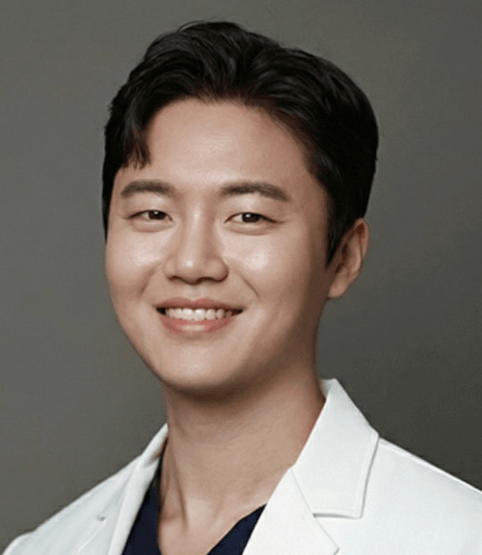
Dr. Park Tae-oh is the founder and director of Relieve Clinic Seoul in Apgujeong, Gangnam, where he performs consultation and treatment personally. His work centers on reducing discomfort during aesthetic dermatology, drawing on more than 30,000 clinical cases. In June 2026 he demonstrated periorbital radiofrequency technique using XERF at Cynosure Lutronic Academy Korea.
🎁 First-time visitor? Get FREE Recovery Care (₩100,000 value)
Fill Out the Form Now→