


A skin clinic Seoul price list will not tell you your bill: a Korean quote is built from a unit and a quantity.
Find which of the four units you are charged in — per unit, per cc, per shot or per line — then ask the quantity. Add ten percent VAT, non-refundable for foreign aesthetic patients since January 2026.
The frustrating part of comparing Seoul clinics is that two estimates for what sounds like the same treatment can be written in two different currencies of measurement.
One quotes a face. The other quotes a syringe. Neither is wrong, and neither is comparable to the other until you translate both into the same terms.
What follows is the translation. Four units, what each one conceals, how VAT now works, and a worked example of an estimate read line by line.
A note on whose voice this is: Relieve Clinic is a dermatology clinic in Apgujeong, Seoul, and Dr. Park Tae-oh consults and treats patients directly, with no sales consultants in the room. We do not publish a single fixed public price list, so nothing below should be read as our rate card.
What a skin clinic Seoul price list leaves out
Almost every aesthetic estimate in Seoul resolves to one of four pricing units. Knowing which one you are looking at is most of the work.
- Per unit: botulinum toxin. A unit measures biological activity, not volume, and dosing is decided by anatomy.
- Per cc: injectables measured by volume — fillers, polynucleotide boosters, collagen stimulators. A syringe is a container, not a dose.
- Per shot: energy devices such as micro-focused ultrasound. Shots are individual energy deliveries, and the count is what defines coverage.
- Per line: thread lifting. A line is one thread, and the number placed is the plan.
A fifth thing masquerades as a unit and is not one: the package name. “Full face lifting programme” describes nothing you can verify. Ask what is inside it, in which of the four units, and in what quantity.
Per unit, per cc, per shot, per line: what each one hides

Each unit conceals a different variable, which is why the cheapest-looking rate is so often attached to the most expensive plan.
Per unit hides the dose.
Masseter toxin runs roughly 25 to 35 units per side for women and 40 to 50 per side for men, so a jaw plan lands somewhere between 50 and 100 units in total.
A glabella treatment is usually around 20. At an identical unit rate, those are completely different bills.
Axillary hyperhidrosis has its own trap: 100 units across both sides is the standard, and a clinic advertising a cheap price by dosing 50 is selling you an earlier fade rather than a discount.
Per cc hides the formulation and the method.
With polynucleotide boosters, a full-face protocol is 2 cc, and the price moves with four things: which formulation, how many syringes, whether injection is manual or by automatic injector, and single session versus a course. The eye-area version is also 2 cc but a different product.
Per shot hides the coverage.
For micro-focused ultrasound, typical counts are 100 to 200 shots around the eyes, 150 to 250 for brow and forehead, and 400 to 600 for a full face. A quote of “300 shots, full face” is a quote for partial coverage, whatever the header says.
Depth matters as much as count, since the handpiece works at 1.5, 3.0 and 4.5 mm, and the eyelid area is treated only with the shallower two.
Per line hides the thread specification. Threads differ in material, length and barb design, and a line count without a thread type is half a sentence.
Toxin brands deserve their own note, because the unit rate varies by product while the outcome depends on technique. Korean-made and imported toxins are both regulated by the Ministry of Food and Drug Safety, and neither category is inherently superior — the price gap traces mostly to logistics rather than quality.
Our botox cost in Korea per unit and by brand guide breaks that comparison down properly.
VAT since January 2026
This is the single most out-of-date thing on the English-language internet about Korean clinic pricing, so read it carefully.
Cosmetic medical procedures in Korea carry ten percent value-added tax. Until recently, foreign patients could reclaim that VAT on aesthetic treatments when leaving the country. That refund ended on 1 January 2026.
The quoted price plus ten percent is now your final out-of-pocket cost, and there is no refund counter at the airport for aesthetic services. Any guide that still tells you to keep your receipts for an Incheon refund desk is describing a scheme that no longer applies to you.
Two practical consequences. First, always confirm whether a figure you have been given is VAT-inclusive or VAT-exclusive, because clinics write it both ways and the difference on a seven-figure won estimate is not trivial.
Second, budget the total rather than the headline. Payment is normally accepted in Korean won cash or by Visa, MasterCard, JCB and Amex, so currency conversion is a separate line of thinking.
💡 For the wider economics of why Seoul pricing sits where it does, why Korean skin treatment is so affordable takes apart the supply chain — the background this article assumes.
Packages versus single sessions
Course-based treatments are genuinely cheaper per session when bought together, and that is a real saving rather than a sales trick. Polynucleotide boosters usually run three to four sessions two to four weeks apart.
Microneedling radiofrequency for general regeneration runs three to four sessions, or four to six for acne scarring, at four to six week intervals. Microwave tightening is typically two to three sessions four weeks apart.
The risk is not the discount. It is the calendar. A four-session course spanning twelve weeks does not fit inside a two-week holiday, so before you prepay, ask three questions: does the package expire, is the unused balance transferable or refundable, and can sessions be completed on a later visit.
What a cheap quote usually leaves out
A low number is not suspicious by itself. It becomes suspicious when the quantity is missing, because that is where the difference usually lives.
Numbing is the underrated line item. For injectable courses, the protocol difference between ten minutes of anaesthetic cream and a proper thirty to fifty minutes is the difference between an uncomfortable appointment and a tolerable one — and the shorter version is faster for the clinic’s schedule, not for you.
Ask how long numbing will actually run before the first needle.
Ask, too, whether the product is unsealed in front of you. A box carried into the room with brand and expiry visible, then opened where you can watch, costs nothing to provide and settles a question you cannot otherwise answer.
A worked example of reading one quote
The figures below are published reference points with their sources named. They are general Seoul market context and statutory disclosure figures, not a Relieve quote, and all were checked on 23 September 2026.
| Line on the estimate | What to ask | Reference figure | Source |
| Lifting laser, per session | Which device, which depth, how many shots | From KRW 330,000 per session | Relieve Clinic statutory non-covered fee disclosure, checked 23 Sep 2026 |
| Scar or pore treatment, per session | Which tip, how many sessions planned | From KRW 300,000 per session | Relieve Clinic statutory non-covered fee disclosure, checked 23 Sep 2026 |
| Botulinum toxin | Unit rate, brand, total units | Quoted per unit; jaw plans total 50 to 100 units | Dosing ranges, Relieve clinical protocol |
| Polynucleotide booster | Formulation, syringes, manual or injector | Full-face protocol is 2 cc per session | Relieve clinical protocol |
| VAT | Inclusive or exclusive | 10 percent, non-refundable since 1 Jan 2026 | Korean VAT rules for cosmetic procedures |
Korean clinics are required to disclose fees for non-reimbursed care, a framework administered under the Health Insurance Review and Assessment Service, and the two “from” figures above come from our own statutory non-covered fee disclosure rather than a marketing menu.
A “from” price is a floor, not an estimate for your face. That disclosure page is as close as a skin clinic Seoul price list gets in Korea, and it still cannot price your own plan.
Reading it in order: identify the unit, pin the quantity, confirm the product name, add ten percent, and check whether the number covers one session or a course.
If any of those five is missing, you are holding an advertisement rather than an estimate. For broader context on current market ranges see our overview of skin treatment prices in Korea for 2026, and for two individually verified patient payments — not a fixed rate card — see the Relieve Clinic Seoul price page.
Figures cited here are published reference points, not an offer or an individual estimate. Dosing, session counts and therefore cost differ from person to person, individual results vary, and a personal quotation can only follow an in-person consultation with a licensed physician.
Chat with Relieve Clinic — Free English Consultation
A quote is only half the decision, and the other half is the clinic itself — our guide on how to choose a skin clinic in Seoul sets out the criteria that sit behind the numbers.
Do Seoul clinics publish a skin clinic price list?
Korean clinics must disclose fees for non-reimbursed care, so statutory disclosure pages exist, but they show starting figures rather than your personal cost. The figure that matters is the unit rate multiplied by the quantity your plan actually uses.
Is VAT included in a Korean clinic quote?
Sometimes, and sometimes not, so ask directly. Ten percent VAT applies to cosmetic procedures and, since 1 January 2026, foreign aesthetic patients can no longer reclaim it on departure.
Why do two clinics quote such different prices for the same treatment?
Usually because the quantity differs rather than the rate. Different unit counts, syringe numbers, shot counts or thread counts sit behind identically named treatments, so compare quantities before comparing totals.
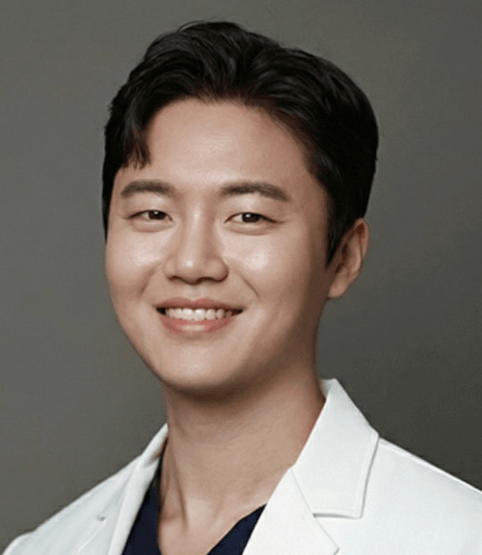
Dr. Park Tae-oh is the founder and director of Relieve Clinic Seoul in Apgujeong, Gangnam, where he performs consultation and treatment personally. His work centers on reducing discomfort during aesthetic dermatology, drawing on more than 30,000 clinical cases. In June 2026 he demonstrated periorbital radiofrequency technique using XERF at Cynosure Lutronic Academy Korea.
🎁 First-time visitor? Get FREE Recovery Care (₩100,000 value)
Fill Out the Form Now→