


Judge a skin clinic in Seoul on five checkable things: who performs the treatment, how many patients are booked per hour, whether the quote is written down with VAT included, whether the product is opened in front of you, and what aftercare exists once you fly home.
Reputation rankings tell you far less than those five answers.
Most people arrive at this question the same way. You have a fortnight in Korea, a browser full of tabs, and a forum thread where six strangers each name a different place in Gangnam.
Nobody agrees, the photos all look identical, and the only honest conclusion is that a list of names is not a method.
So this guide gives you a method instead. The first six sections are criteria you can apply at any skin clinic in Seoul, including ones we have never heard of.
Only at the end do we say how our own clinic answers them, so you can see the criteria working rather than take our word for anything.
We write from a specific chair: Relieve Clinic in Apgujeong, where Dr. Park Tae-oh consults and treats one-to-one in a private room.
Fifteen years and more than 30,000 clinical cases produce opinions, and you should read the sections below knowing whose opinions they are.
Who actually holds the needle at a skin clinic in Seoul
This is the first question to put to a skin clinic in Seoul, and it filters more clinics than any other.
In a lot of high-volume practices the person who talks you through options is a sales coordinator, the person who assesses your face is one doctor, and the person who eventually injects is a third.
Each handoff loses information, and the plan you agreed to is not always the plan that reaches the treatment room.
Ask it plainly, in writing if you can: will the doctor I consult with be the doctor performing the procedure?
A clinic that cannot answer yes is not necessarily unsafe. It is simply structured around throughput, and throughput is the opposite of what you want when someone is mapping muscle by muscle across your own face.
Check the licence too. Every practising physician in Korea is licensed through the Ministry of Health and Welfare, and clinics registered to treat international patients appear on the government-run Medical Korea portal operated by the Korea Health Industry Development Institute. Registration is not a quality ranking.
It is a floor, and a clinic that has not bothered to clear the floor is telling you something.
One-to-one rooms versus assembly-line scheduling
Scheduling density is the least discussed and most predictive variable in the whole decision. A clinic that books many times that has built a factory-style flow, and the flow is what governs your appointment.
You will be moved between rooms, your numbing cream will come off on a timer rather than when it has worked, and questions that occur to you mid-treatment will be answered on the way out.
Density shows up in small symptoms. Shared treatment bays with curtains instead of doors. A consultation that runs under ten minutes.
Numbing time quoted as a flat figure regardless of procedure, when the honest answer for an injectable course is closer to thirty to fifty minutes before the needle goes anywhere near you.
You can measure it without being rude. Ask how many patients the doctor sees in an hour. Ask whether the room is private. Then notice how long the answer takes, because a clinic that has thought about this has a number ready.
Price transparency: what a written quote must show
Aesthetic dermatology in Korea is non-reimbursed care, which means clinics set their own fees and are legally required to disclose them. A verbal figure is not a quote. Before you agree to anything, you want the numbers on paper or on a screen you can photograph.
- The unit of pricing: per unit, per cc, per shot or per line. The same procedure named identically at two clinics can be sold in two different units.
- The quantity: how many units, syringes, shots or threads your plan actually uses. A rate without a quantity is not a price.
- The product name: the specific brand, not a house nickname invented for the menu.
- VAT: ten percent, added on top. Since 1 January 2026 the refund that foreign aesthetic patients used to claim no longer exists, so the quoted figure plus VAT is what leaves your account. There is no airport refund counter for this.
- Session count: whether the figure covers one visit or a course, and what happens to the balance if you fly home mid-course.
That last VAT point catches people who read older travel guides. The rule genuinely changed, and any blog still promising a tax refund on your way out of Incheon is working from stale information.
💡 Reading an itemised estimate is a skill of its own, and we have written it out line by line in how to read a Korean clinic price quote — that guide covers the arithmetic this one only gestures at.
Can you see the vial opened?
Every injectable arrives in a sealed box with a brand name and an expiry date printed on it. Whether you get to see that box is a policy choice, and it is one of the cleanest signals available to a patient who cannot read Korean packaging.
Ask whether the product will be unsealed in the room. The request is reasonable, it costs the clinic nothing, and the reaction to it is informative regardless of the answer.
Korean-manufactured toxins and imported ones are both regulated by the Ministry of Food and Drug Safety, so the question is never which country stamped the box — it is whether the box in front of you is sealed, in date, and opened where you can watch.
Language support that lasts past the consultation
Plenty of clinics advertise English service and deliver it for the twenty minutes that matter commercially.
The support disappears afterwards, which is exactly when you need it — the evening your cheek feels tight, the morning a bruise turns a colour you did not expect.
Three things separate real support from a marketing line. A coordinator present during treatment rather than only at booking.
Aftercare instructions written in a language you read fluently, not translated verbally at the door. And a messaging channel that still answers on day three.
If you are nervous about needles on top of the language gap, our low-discomfort treatments in Seoul guide explains how numbing protocols and injector technique change the experience, and what to say to a clinic before you sit down.
What happens after you fly home
Collagen-based results are slow. Skin boosters remodel over weeks, energy-device tightening peaks months after the appointment, and the day you leave Korea is usually the day before anything interesting starts happening.
A clinic that treats your departure as the end of the relationship has quietly left you to interpret the most important stretch on your own.
Ask how progress gets measured. Photographs on a phone are memory, not measurement. A clinic using a 3D skin analysis system records the same area at consultation and compares it across sessions, which converts a vague sense of improvement into something reviewable — including remotely, months later.
Then ask the blunt version: if something looks wrong in week three, from another country, who reads my message and how fast?
Remote follow-up means and nobody has to decide on their own whether something looks normal.

Questions worth asking before you book
Here is the whole method as a checklist. Send it by message to every skin clinic in Seoul on your shortlist before you fly. The replies, and the speed of the replies, will narrow a shortlist faster than another evening of reviews.
| Ask this | A reassuring answer sounds like | Worth a second thought |
| Will the consulting doctor perform the treatment? | Yes, named, one-to-one | Assigned on the day |
| How many patients per hour? | A specific low number | No number given |
| Is the room private? | Single-patient room | Curtained shared bay |
| Written quote with VAT? | Itemised, ten percent shown | Verbal figure only |
| Will the product be opened in front of me? | Sealed box shown, then unsealed | Already drawn up |
| How is progress measured? | Recorded skin analysis, compared | Phone photos |
| Aftercare once I leave Korea? | Named remote channel | Nothing specified |
For a walkthrough of the appointment itself — paperwork, what to bring, how long to allow — read our guide to a first skin clinic visit in Seoul.
How one clinic answers its own checklist
Having set out those criteria, it would be evasive to skip our own answers. Dr. Park consults and performs, with no sales consultants in between.
Bookings run at two to three patients an hour rather than a packed column, and treatment happens in a private single-patient room. Product boxes come to the room sealed, are shown with brand and expiry visible, and are opened where you can see it.
Skin condition is recorded on a 3D analysis system at consultation and compared at later sessions. English coordinators are on site with Arabic enquiry support available, patients have come from more than fifteen countries, and follow-up continues remotely after you fly home.
Whether that is the right fit depends on what you are treating — which is a conversation, not a webpage.
Our longer, less promotional account of how the clinic works is in this honest guide to Relieve Clinic Seoul, including the things we do not offer.
This article is general information about choosing a clinic and is not medical advice. Suitability, expected outcomes and risks differ from person to person, individual results vary, and nothing here replaces an in-person consultation and examination by a licensed physician.
Ask Dr. Park a Question Before You Fly
How do I find an English speaking dermatologist in Seoul?
Look for clinics registered to treat international patients on the government Medical Korea portal, then confirm by message that an English coordinator is present during treatment and not only at booking. Ask whether aftercare instructions are supplied in writing in English.
Are Seoul skin clinics foreigner friendly?
Many are, but the level varies widely. The practical test is whether the clinic gives you a written quote with VAT included, a private room, and a named channel for questions after you leave Korea.
Can I still claim a VAT refund as a foreign patient?
No. The refund for foreign aesthetic patients ended on 1 January 2026. The quoted price plus ten percent VAT is your final out-of-pocket cost and there is no refund at the airport.
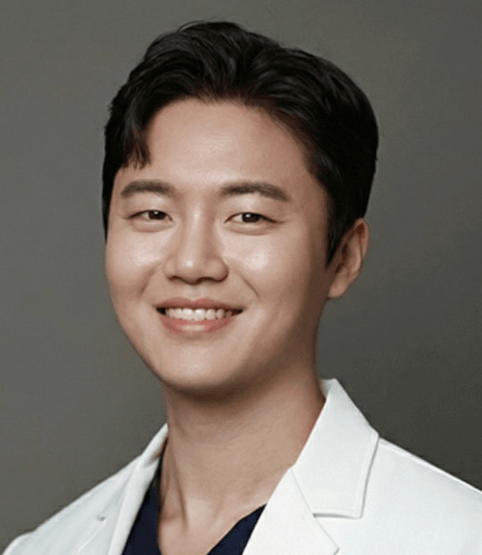
Dr. Park Tae-oh is the founder and director of Relieve Clinic Seoul in Apgujeong, Gangnam, where he performs consultation and treatment personally. His work centers on reducing discomfort during aesthetic dermatology, drawing on more than 30,000 clinical cases. In June 2026 he demonstrated periorbital radiofrequency technique using XERF at Cynosure Lutronic Academy Korea.
🎁 First-time visitor? Get FREE Recovery Care (₩100,000 value)
Fill Out the Form Now→