


Korea scar removal is planned by scar type rather than by device.
Most plans start with RF microneedling paired with a collagen-stimulating booster, add CO2 laser for discrete lesions and pigment, and handle ice pick scars separately with TCA CROSS or subcision. Four to six sessions, spaced four to six weeks apart, is the usual arc.
That answer probably contradicts the version you have been reading.
Search results for Korea scar removal tend to present one machine as the solution and work backwards from there, which is convenient for marketing and unhelpful for a face that has three different kinds of scarring on it at once.
We are Relieve Clinic, a dermatology practice by Apgujeong Station in Seoul. Dr. Park Tae-oh — fifteen-plus years, 30,000-plus clinical cases — does the consultation and the procedure himself, in a private room, with no sales manager in the middle.
Scar consultations here begin with a 3D skin analysis that maps what is actually on the skin before anyone picks up a handpiece.
What follows is the reasoning behind that sequence, including the one mistake that sinks more scar courses than any device limitation does.
Why scar mapping comes before any device
Here is the mistake: applying one device uniformly across several scar types. It is the single most common reason a scar course underdelivers, and it is not a technology problem.
A boxcar scar and an ice pick scar sitting two centimetres apart want opposite things, and a setting that suits one will simply be the wrong tool on the other.
Mapping is what prevents that. In our consultations the 3D skin analysis system records the surface at the start, which does two jobs — it sorts the scars into types so the plan can be layered, and it gives a measured baseline so that improvement between sessions is compared against a record rather than against memory.

Scar types and what each one responds to
Five categories cover almost everything we see in a Korea scar removal consultation.
| Scar type | What it looks like | What it responds to |
| Boxcar | Wide, sharply walled depressions | Fractional CO2 to soften the edges; repeated RF microneedling when deep |
| Rolling | Soft undulations, worse in side light | RF microneedling or fractional resurfacing, plus a collagen biostimulator to release tethering bands |
| Ice pick | Narrow, deep, needle-like pits | TCA CROSS or punch excision — surface resurfacing alone struggles here |
| Mixed | Several types across one cheek | A layered protocol, settings changed by zone |
| Scarring with redness | Texture plus persistent flush | The textural plan with a vascular laser pass added |
Most faces land in the mixed row. That is not a complication — it is the normal starting point, and it is exactly why the mapping step exists.
Two things shorten the map into something you can hold in your head. Depressed scars come from tissue that was lost and never rebuilt, so the work is about provoking the dermis to build again and, where the scar is anchored down, about cutting it loose first.
Redness is a separate axis running on top of all of it, which is why a vascular pass gets added rather than substituted.
Why RF microneedling plus a collagen booster is the usual starting point
Our main route for scar texture is Potenza RF microneedling combined with a collagen-stimulating booster — the Potenza and Juvelook pairing we use as a signature.
The logic is mechanical. The needles open micro-channels and deliver radiofrequency at a chosen depth; the PDLLA and HA booster then works inside a dermis that has just been primed to respond, which strengthens the remodelling reaction rather than duplicating it.
Depth control is the part that decides results. Forehead and jawline skin is thin and takes shallower depths and lower energy; cheeks are thicker and take a deeper tip.
The Potenza platform from Cynosure supports both monopolar and bipolar radiofrequency with adjustable needle depth, and it can deliver fluid through the channels during the pass.
There is a second advantage that matters a great deal to international patients.
Because Potenza delivers radiofrequency through needles rather than light through the skin surface, it is generally considered suitable across Fitzpatrick skin types I to VI when the settings are calibrated properly — which means darker skin tones are not automatically routed to a weaker plan out of caution about pigment.
💡 If you are also weighing how many Potenza sessions are needed for the same trip, that guide covers the session arithmetic this one only summarises.
Where CO2 laser fits in Korean scar treatment
CO2 is ablative: it vaporises microscopic columns of tissue. Fraxel, by contrast, is a non-ablative option many clinics offer.
Ablative work goes deeper and often needs fewer sessions, and it asks for a longer recovery in exchange.
We use CO2 laser for discrete lesions and for pigment, and for softening the rigid edges of boxcar scars. After a full-face pass, expect redness and swelling for a day or two, flaking through days five to seven, and makeup at roughly the one-week mark.
CO2 laser resurfacing in Korea walks through that calendar day by day.
What ice pick scars need that resurfacing cannot give
Ice pick scars are narrow and steep, and they extend further down than a resurfacing pass comfortably reaches. Smoothing the surface around a deep pit does not lift the base of it.
- TCA CROSS: a focused chemical application placed into the pit itself to provoke collagen from the base upward, repeated over several visits.
- Punch excision: the pit is removed as a small unit for scars too narrow and deep to lift.
- Subcision: tethering bands beneath a depressed scar are released so the surface can rise.
- Layered afterwards: these are combined with the RF microneedling course rather than replacing it.
How many sessions acne scar treatment realistically takes
General skin regeneration runs three to four RF microneedling sessions. Acne scarring runs four to six. Both are spaced four to six weeks apart, because the interval is what the collagen response needs, not an administrative preference.
Pore and texture change is usually noticeable at two to four weeks.
The deeper remodelling that scars depend on unfolds across three to six months, which means the final session is not the finish line — it is the start of the last stretch.
On cost, there is no single fixed rate card here, and the figure below is not a quote.
The statutory non-covered fee disclosure every Korean clinic must publish lists scar and pore treatment at Relieve from KRW 300,000 per session (source: statutory fee disclosure, checked 23 September 2026), and the honest framing is that what you pay depends on scar type, how many zones are treated and whether a booster is layered in.
Since 1 January 2026, the VAT refund for foreign patients on cosmetic medical treatment has been abolished, so the quoted figure plus 10% VAT is your final out-of-pocket cost and there is no reclaim at the airport.
Our breakdowns of laser scar removal cost and acne scar treatment laser price go through the variables in full.
Comfort is worth asking about before you commit to a course, because a course you dread is a course you abandon.
Needling depth is what people feel, and the variable that changes the experience most is numbing time rather than numbing product — thirty to fifty minutes of properly applied cream behaves very differently from the ten-minute version a high-volume clinic has time for.
Vibration, injector rhythm and, for anxious patients, sedation are the other levers.
Planning acne scar sessions in Seoul around a trip
Nobody stays six months.
The realistic structure for a visitor is to complete the mapping and the first one or two sessions in Seoul, then continue at intervals — either on a return trip, or with a local provider working from our notes.
We run remote follow-up after patients fly home, including guidance for a practitioner treating you elsewhere, so aftercare has somewhere to go once you are home at.
One scheduling note worth taking seriously: if CO2 is in the plan, put it where a week of flaking will not collide with a wedding, a beach or a long-haul flight the next morning.
Results vary between individuals, and scar work in particular depends on scar age, skin type and how your skin heals. Nothing here is a substitute for an in-person examination.
Book Your Complimentary Skin Assessment
Sessions that leave the skin reactive are often finished with a calming step, and LDM treatment in Korea covers where that fits in a scar plan.
Can acne scars be fully removed in Korea?
Depressed scars are improved rather than erased. A layered plan aimed at the specific scar types usually produces meaningful smoothing over several months, and individual results vary.
Is RF microneedling safe for darker skin tones?
Because the energy travels through needles rather than through light absorbed at the surface, it is generally considered suitable across Fitzpatrick I to VI when settings are calibrated for the individual.
How long should I stay in Seoul for scar treatment?
Mapping plus one or two sessions fits comfortably into a short trip. The remaining sessions are spaced four to six weeks apart and can continue on a return visit or with remote guidance.
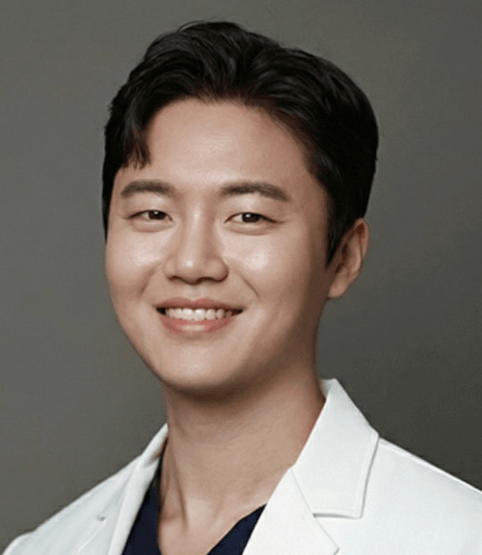
Dr. Park Tae-oh is the founder and director of Relieve Clinic Seoul in Apgujeong, Gangnam, where he performs consultation and treatment personally. His work centers on reducing discomfort during aesthetic dermatology, drawing on more than 30,000 clinical cases. In June 2026 he demonstrated periorbital radiofrequency technique using XERF at Cynosure Lutronic Academy Korea.
🎁 First-time visitor? Get FREE Recovery Care (₩100,000 value)
Fill Out the Form Now→